

SniperAutomaticExploiter
Continuous offensive security and exposure management for web applications, networks, APIs, and cloud infrastructure.
47,000+
Security professionals
2.1B+
Vulnerabilities found
99.3%
Detection accuracy
< 0.8%
False positive rate
1,200+
Pentest firms
SOC 2 II
Certified & ISO 27001
Find exploitable web app vulnerabilities with documented evidence
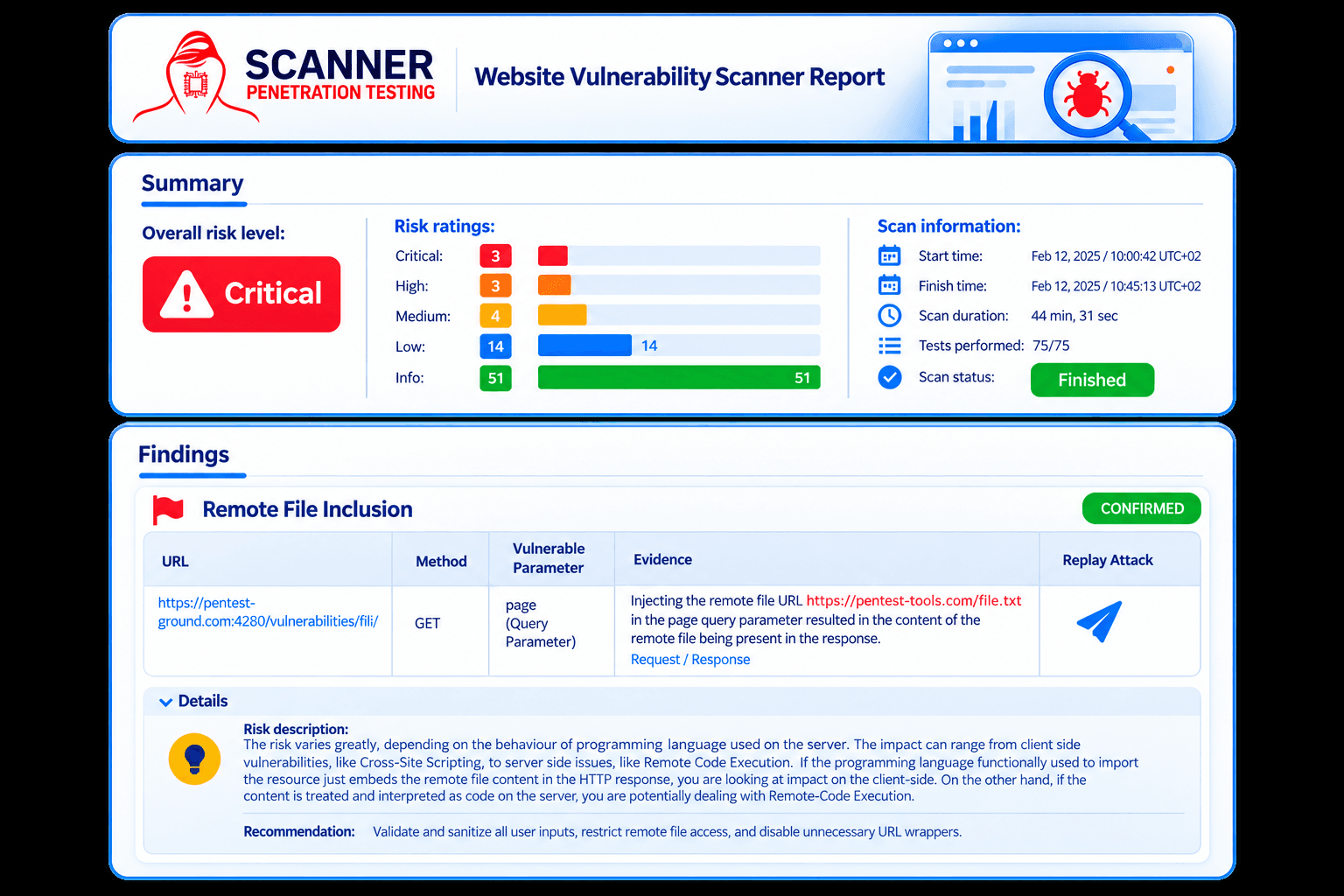
Our proprietary Website Vulnerability Scanner gives security pros and appsec teams what they need: highly accurate, validated findings and actionable evidence - not just a long list of possible exposure points.Unlike generic scanners that flag potential issues without context, our tool uses out-of-band detection to minimize false positives and ensure reliable results, collecting proof along the way.
Every attack vector, One Tool
Continuous offensive security and exposure management for web applications, networks, APIs, and cloud infrastructure.
SQL Injection
Validate input handling and confirm database access safely with reproducible evidence.
Scripted Headers
Test security headers, cookie flags, and browser protections across every route.
Content Security Policy
Assess CSP coverage and identify policy gaps that expand the attack surface.
Evidence Collection
Capture reproducible proof for every confirmed vulnerability and exploit path.
Controlled Exploitation
Run bounded checks that prove impact without uncontrolled production changes.
Info Disclosure
Find version strings, debug output, and sensitive metadata exposed to users.
XSS Protection
Validate reflected and stored injection paths using controlled payloads.
AI Triage
Prioritize confirmed findings by exploitability, impact, and remediation effort.
How offensive security pros use
Sniper - Automatic Exploiter
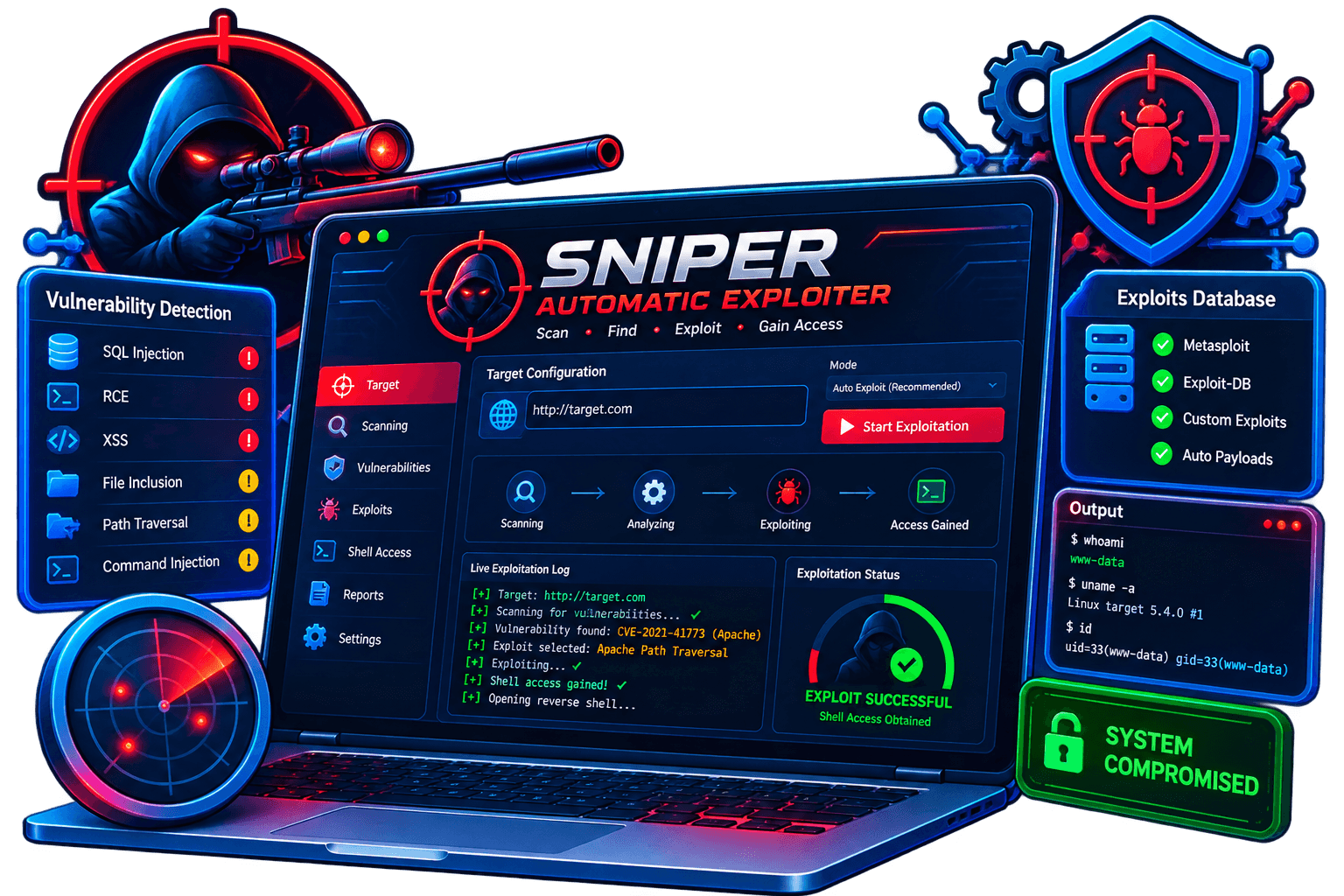
Sniper automatically does exploitation and post-exploitation of known, widespread vulnerabilities in high-profile software. Notorious examples include Log4Shell, ProxyShell, ProxyLogon, Ghostcat, and many other critical CVEs that never get patched.
Sniper can also generate a crafted malicious file to use in client-side attacks during your engagements.
In just a few minutes, this powerful tool gains RCE on vulnerable websites.#artifacts
Fast Vulnerability Validation
Validate suspected vulnerabilities quickly and preserve reproducible proof for every confirmed weakness.
Controlled Exploitation
Execute bounded checks with direct access to the target host while keeping the engagement safe.
Automatic Initial Access
Gain initial access automatically whenever possible so your team can focus on impact and remediation.
Network Topology Visualization
Summarize reachable hosts, services, and attack paths in one clear view.
Methodic Attack Surface Reduction
Prioritize remediation using concrete evidence from the confirmed attack surface.
Pivoting & Lateral Movement
Understand reachable systems and validate lateral movement paths without losing control.
Sample
Port
Scan
Report
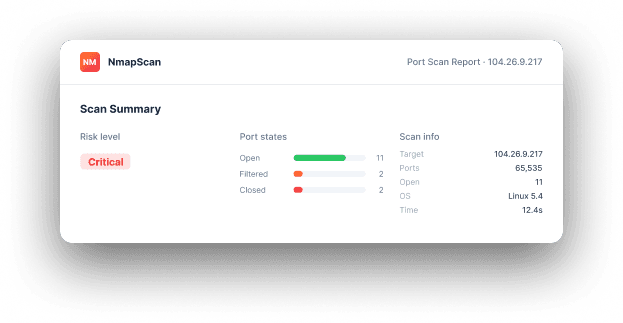
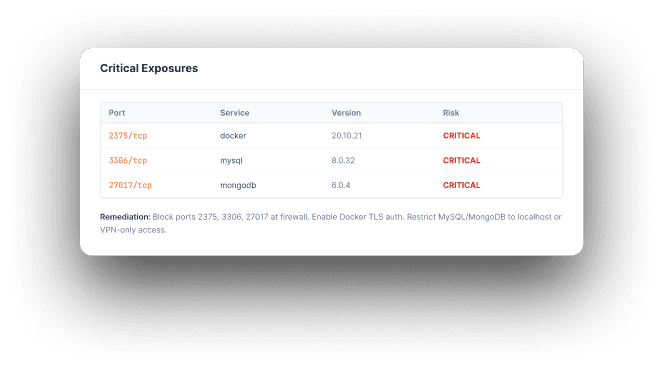
This sample report shows what you receive after every scan: discovered ports, detected services, risk classification, and remediation guidance.
Download sample reportAn at-a-glance summary of total ports, detected services, risk distribution, and critical internet-exposed assets.
From scan to fix - fully automated
Wire vulnerability discovery directly into your development pipeline. No manual triage handoffs.
Scan & Discover
Map asset discovery and vulnerability scanning across your web, app, or deployment workflow.
AI Triage
The AI engine validates, deduplicates, and ranks findings. Only confirmed issues reach your team.
Prioritize & Assign
Risk-ranked findings route to the right team automatically via Jira, Linear, or Slack with full context.
Remediate & Verify
Developers get guided, AI-generated patches. Automated re-scan confirms the fix is clean.
Report & Prove
One-click reports for executives, clients, and auditors, customized, white-labeled, always current.
Use this tool from your command line interface
If you prefer it, we also provide a CLI version of our Website Vulnerability Scanner. Through the ScanCore CLI, you can run scans against your web apps and start gathering insights for your next move.
1. Installation
If you have docker or pip installed, you can use them to get scancore:
2. Usage
Quickstart: run the following command in your terminal to find the vulnerabilities of your website.
You can learn more options with the --help flag:
Frequently asked questions
Everything you need to know before your first scan.
Yes. Scans are non-destructive and rate-limited by default, and any payload that could have side effects runs through sandboxed proof-of-concept validation instead of against your live system, so normal traffic and uptime are unaffected.