
Targeted Wordlist Scanning
Discover hidden risks with targeted wordlists
Use focused wordlists to discover hidden directories, exposed files, forgotten subdomains, weak credentials, and overlooked API endpoints. Reduce unnecessary scan results and help your security team focus on potential vulnerabilities that matter.
Explore Wordlist Scanning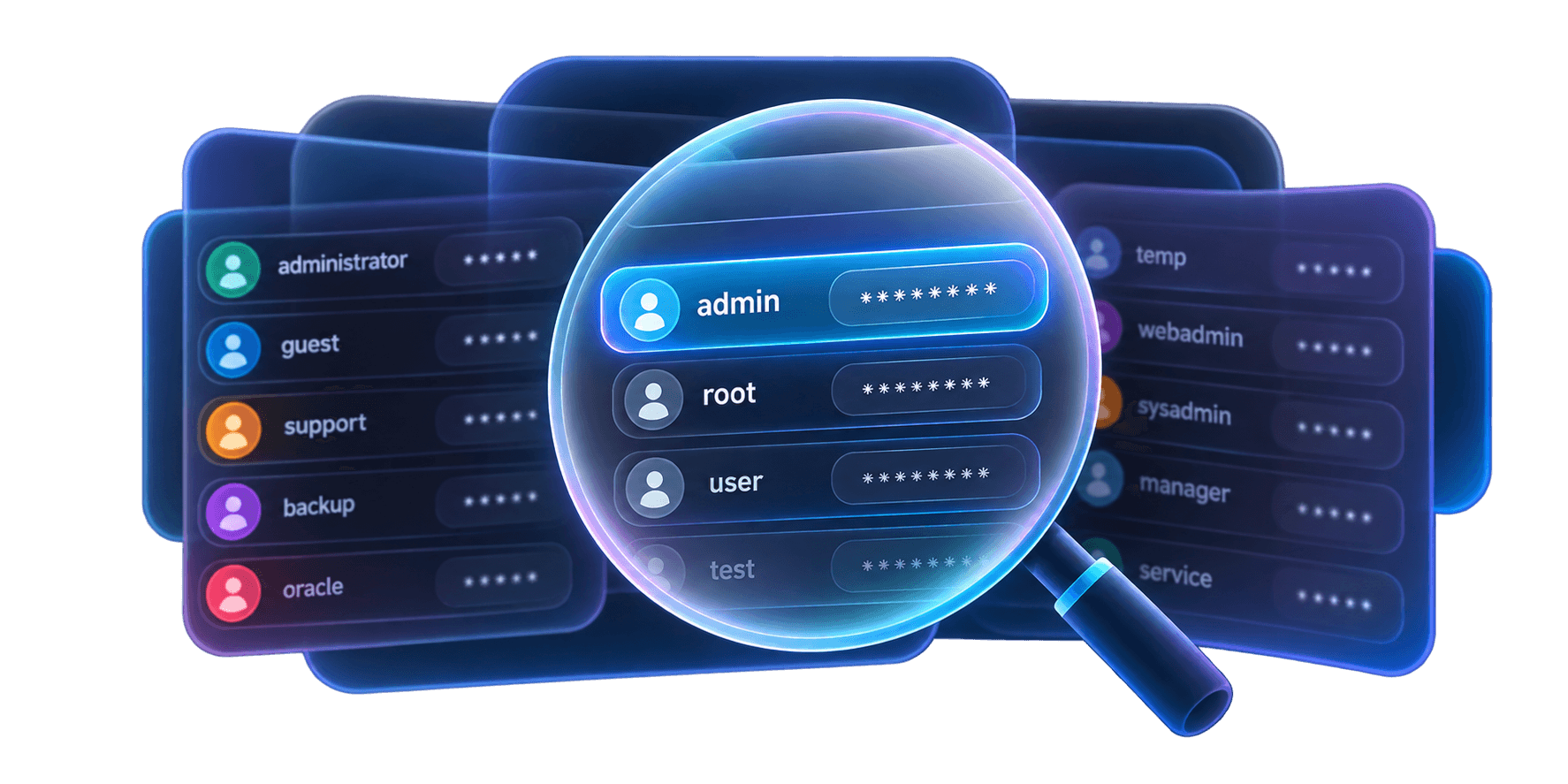
Find More. Waste Less Time.
Wordlists help security tools test potential usernames, passwords, directories, files, subdomains, and API endpoints during security assessments. The quality of these lists directly affects what your scans can discover.
Generic or outdated wordlists can produce unnecessary requests, waste scanning time, and overlook naming patterns specific to modern applications.
Pentestscanner helps security teams use targeted discovery techniques to identify potential exposures, investigate hidden resources, and improve the effectiveness of their security testing.
Reduce Unnecessary Results
Broad wordlists can generate large volumes of irrelevant responses. Focused testing helps reduce noise and makes it easier to investigate meaningful findings.
Discover Overlooked Assets
Hidden directories, staging subdomains, old backup files, and undocumented API routes can remain outside routine testing. Targeted wordlists help uncover these potential blind spots.
Target the Resources Others May Miss
Subdomain Discovery
Identify potential subdomains associated with your authorized targets. Targeted naming patterns can help reveal development environments, staging systems, and other assets that may expand your external attack surface.
Password Testing
Evaluate password security using authorized, controlled testing methods. Suitable password lists can help identify weak credentials and common password patterns that may put accounts at risk.
Directory and File Discovery
Probe web applications for potentially exposed directories, backup files, legacy pages, configuration files, and administrative paths. Investigate responses to determine whether they reveal sensitive information.
API Endpoint Discovery
Test for undocumented or overlooked API routes using relevant endpoint naming patterns. Identify potential versioned endpoints and unexpected resources that may require further security review.
More Relevant Inputs. More Useful Findings.
Every application has its own structure, naming conventions, and technology stack. Choosing relevant discovery inputs can help your scans focus on the resources most likely to exist in your environment.
Target-specific testing
Use relevant naming patterns based on your authorized assets and applications.
Focused discovery
Prioritize likely directories, files, subdomains, and API routes.
Repeatable assessments
Apply consistent testing inputs across recurring security assessments.
Actionable investigation
Review responses and validate potential exposures before treating them as vulnerabilities.
Explore Hidden Routes and Unexpected Inputs
APIs can expose resources and functionality that are not visible through an application's main interface. Targeted endpoint lists can help security teams identify routes that need closer inspection.
Discovery results should always be validated. An accessible endpoint or predictable identifier alone does not prove that a vulnerability exists.
During authorized assessments, API discovery and fuzzing can help you:
Identify undocumented or versioned API endpoints.
Examine how endpoints respond to unexpected or invalid inputs.
Investigate potentially exposed resources and predictable object identifiers.
Detect responses that may indicate missing access controls.
Prioritize endpoints for further manual security testing.
Improve Discovery Without Adding Unnecessary Noise
Focused Testing
Use relevant wordlists to target likely resources instead of relying only on broad, generic guesses.
Efficient Scanning
Reduce unnecessary requests by selecting inputs appropriate to the target and testing objective.
Broader Coverage
Explore potential subdomains, hidden files, directories, and API routes that routine checks may overlook.
Better Investigation
Organize discovery results so your team can review suspicious responses and prioritize further validation.
Wordlists for Everyday Security Testing
Subdomain Enumeration
Look for development, staging, and other potentially overlooked subdomains within your authorized scope.
Sensitive File Discovery
Search for backup files, legacy resources, and directories that may unintentionally expose information.
Password Security Assessments
Test password strength and common credential patterns within an approved security assessment.
API Security Testing
Discover potential API routes and investigate endpoints that may require additional access-control testing.
Frequently asked questions
Everything you need to know before your first scan.
Yes. Scans are non-destructive and rate-limited by default, and any payload that could have side effects runs through sandboxed proof-of-concept validation instead of against your live system, so normal traffic and uptime are unaffected.