
Vulnerability Assessment Reporting
Vulnerability Assessment Reporting: Turn Findings Into Actionable Insights
Transform vulnerability assessment results into clear, structured reports that help teams prioritize security risks, plan remediation, and communicate their security posture. Turn technical findings into meaningful insights for security professionals, developers, and business stakeholders.
Explore Assessment Reporting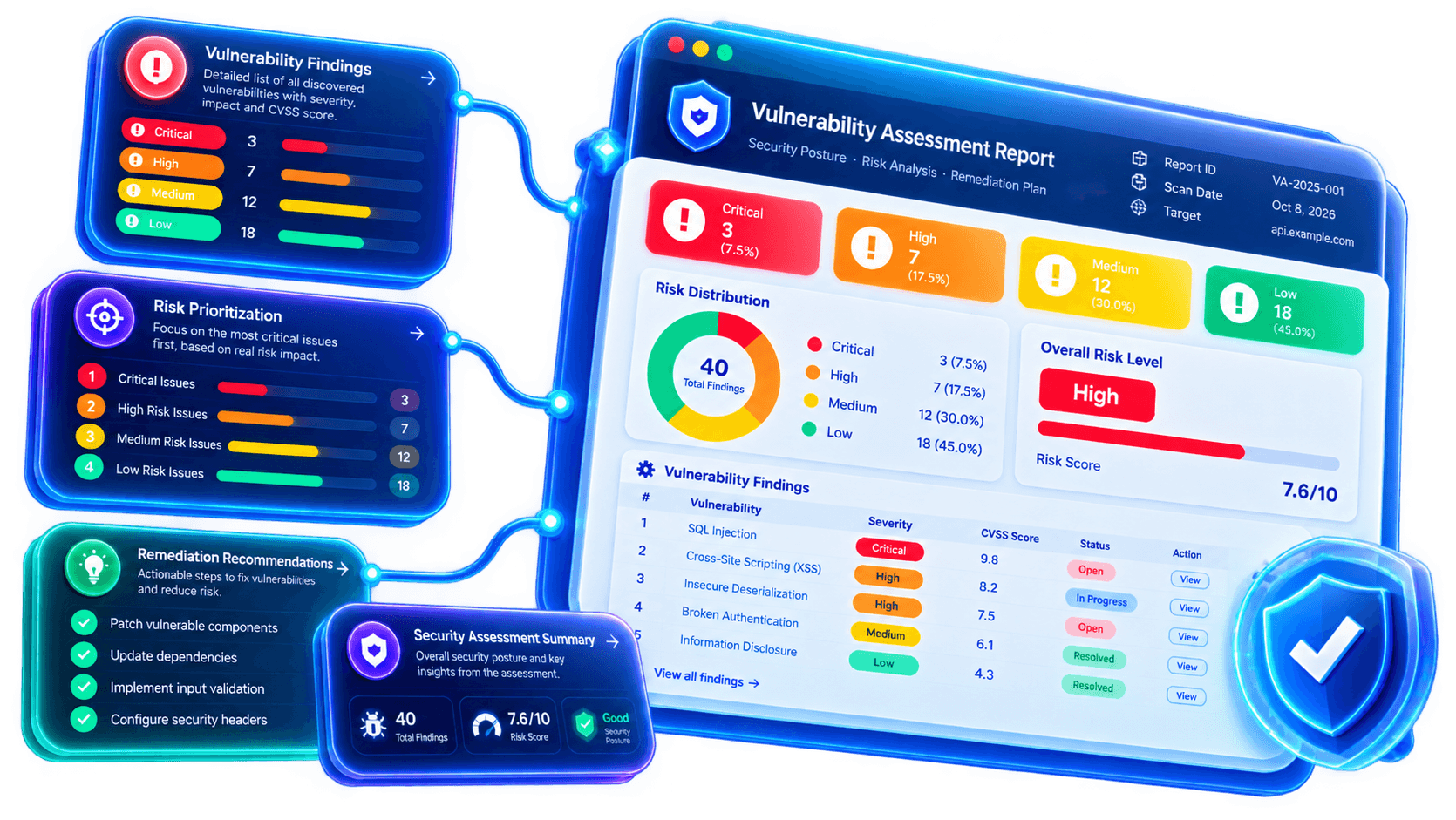
Move From Finding Vulnerabilities to Fixing Them
Streamline Your Assessment Workflow
Bring vulnerability findings into a structured reporting process. Organize scan results, review identified issues, and document remediation recommendations to reduce repetitive manual work and make assessment results easier to manage.
Focus on the Risks That Matter
Not every vulnerability carries the same level of risk. Organize findings by severity, affected assets, and potential impact to help security teams identify important issues and focus remediation efforts where they are needed most.
Scale Your Reporting Process
As the number of assets and findings grows, maintaining a consistent reporting process becomes increasingly important. Use a repeatable structure to keep assessment results organized, improve report consistency, and simplify review across multiple assets.
Support Compliance and Audit Preparation
Clear vulnerability documentation helps organizations demonstrate how security issues are identified, assessed, and addressed. Maintain structured records of findings and remediation recommendations to support internal reviews and compliance preparation.
Communicate Security Risk to Leadership
Business stakeholders need to understand the impact of vulnerabilities without having to interpret every technical detail. Summarize key risks, affected systems, and remediation priorities to help decision-makers understand security needs and allocate resources effectively.
Deliver Professional, Consistent Reports
Present vulnerability assessment results in a clear, professional format. Consistent terminology, organized findings, and practical remediation guidance help teams communicate results more effectively to clients, management, and technical teams.
How Vulnerability Assessment Reporting Works
Turn assessment results into useful security documentation through a straightforward workflow.
Collect findings
Review vulnerabilities identified during security assessments.
Analyze risk
Examine severity, affected assets, and relevant technical evidence.
Prioritize remediation
Identify the issues that require the most immediate attention.
Document recommendations
Provide practical guidance for addressing identified vulnerabilities.
Review and share
Prepare structured findings that help technical teams and stakeholders take action.
Looking for the Tools Behind Your Assessment Results?
Vulnerability assessment reports are only as useful as the findings they communicate. Pentestscanner helps security teams identify and review vulnerabilities through security testing workflows, providing a foundation for understanding potential weaknesses and planning remediation.
Built for Teams Managing Vulnerabilities at Scale
Maintain a Consistent Reporting Structure
Use a repeatable approach to document assessment scope, methodology, findings, and remediation recommendations. A consistent structure makes reports easier to review and helps teams maintain quality across different assessments.
Bridge the Gap Between Security Teams and Leadership
Present the overall security picture in language that different audiences can understand. Highlight significant vulnerabilities, business impact, and remediation priorities so decision-makers can focus on the most important risks.
Track Findings and Remediation Progress
Keep vulnerability information organized across assessment cycles. Comparing results over time, where historical scan data is available, can help teams identify newly discovered issues, review resolved vulnerabilities, and understand changes in their security posture.
Turn Findings Into Remediation Actions
Help developers move from identifying a vulnerability to understanding how to address it. Include relevant technical details, affected components, and actionable remediation recommendations to support investigation and resolution.
Provide Technical Details for Engineers
Security teams need more than a vulnerability title and severity score. Include available evidence, affected endpoints, relevant request and response details, and reproduction guidance where supported by the assessment results.
Frequently asked questions
Everything you need to know before your first scan.
Yes. Scans are non-destructive and rate-limited by default, and any payload that could have side effects runs through sandboxed proof-of-concept validation instead of against your live system, so normal traffic and uptime are unaffected.