
Attack Surface Management
Automatically map your Attack Surface with results from multiple tools
Get a global view of the possible entry points an attacker can use, including open ports, running services and software, outdated web technologies, and screenshots. Built automatically from your scan results, the Attack Surface gives you a starting point for the next steps in your pentesting engagement.
See pricing & features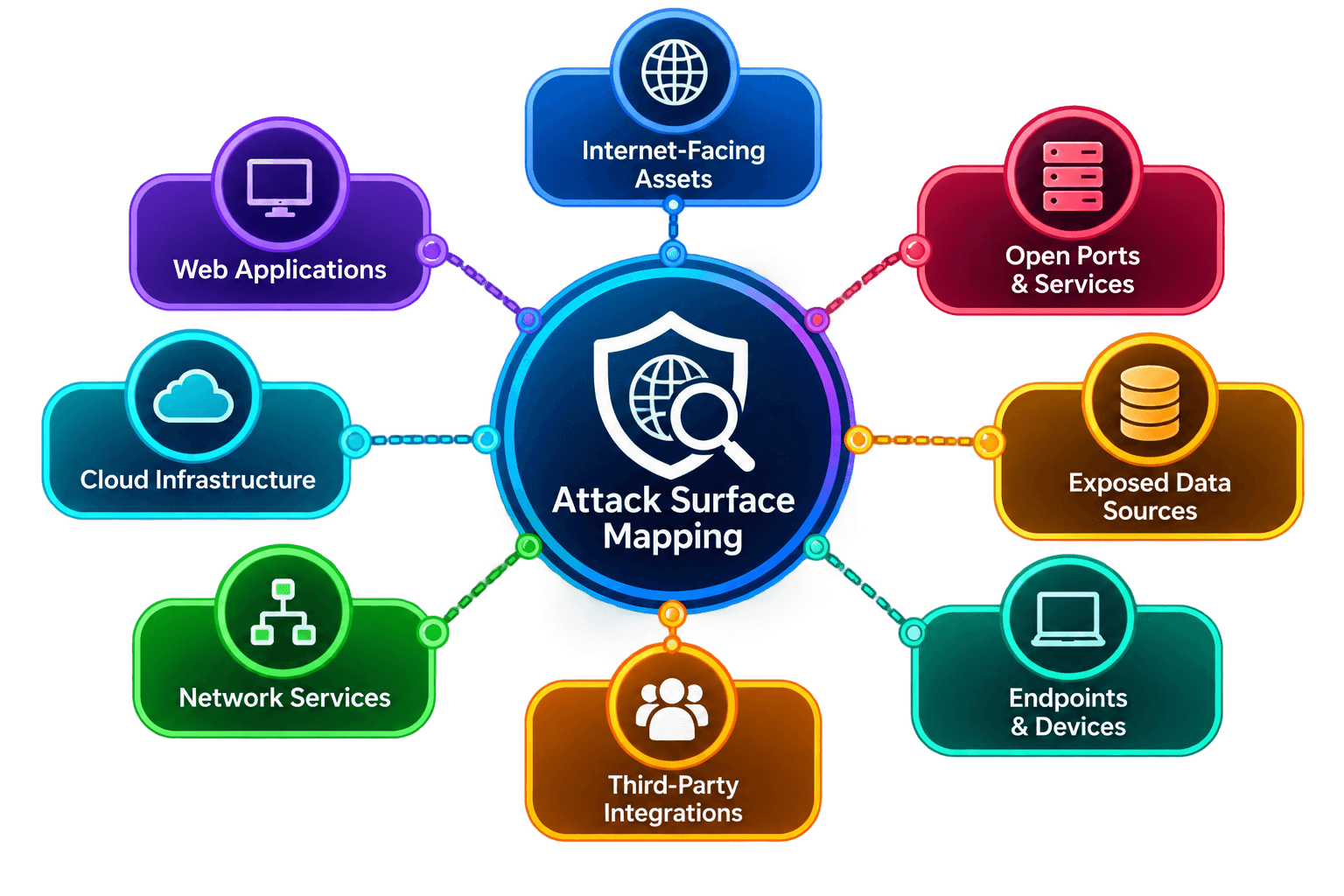
Attack Surface
How automatic Attack Surface mapping works
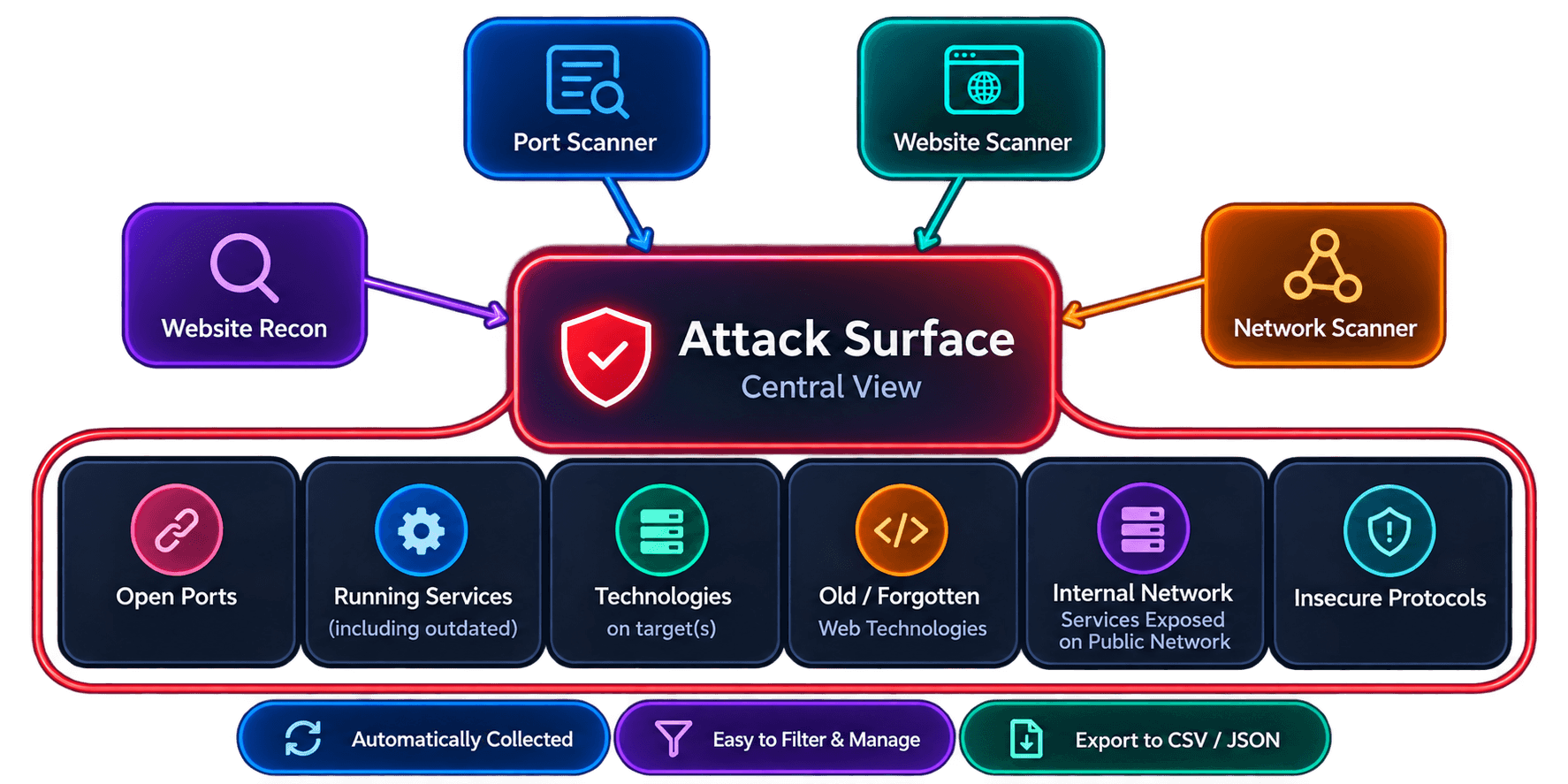
The Attack Surface view aggregates data from these tools:
Launch scans with any of these tools and watch as your Attack Surface auto-fills with crucial details like IP addresses, hostnames, operating systems, open ports, services, technology versions, and screenshots.
And with targets neatly organized in workspaces, you get a comprehensive exposure map for each engagement with zero time spent on manual data collection.
Attack Surface
Key security risks you can diagnose using the Attack Surface
Outdated, exploitable server software
Cause a data breach by exploiting unpatched vulnerabilities.
Open ports (that shouldn't be publicly accessible)
Reveal sensitive data about the network infrastructure.
Internal network services exposed on the public network
Exfiltrate confidential data by brute-forcing weak passwords.
Old and forgotten web technologies
Gain unauthorized access to sensitive data those web applications process.
Attack Surface
6 ways to use the Attack Surface on Pentestscanner
Find initial access points attackers can use
Identify infrastructure entry points an attacker might leverage to compromise the target, using data about its technology stack, service versions, and open ports.
Prioritize remediation for critical exposures
Identify which parts of the system are most vulnerable (for example servers, websites, databases) and reduce risk through targeted actions such as closing ports and retiring unused services.
Assess how much work a pentest might involve
Scope out your future pentesting engagements and reduce your guesswork. Alternatively, compile more accurate budget proposals for your testing projects.
Understand how the Attack Surface changes over time
Regular scans keep your Attack Surface up to date and accurate, giving you time to address exposures before attackers notice and use them.
Create, improve, and track effectiveness of security policies
Use insights from the Attack Surface to develop and refine internal security policies, keeping them aligned with the actual risks the organization faces.
Manage risk from third-party integrations and services
Understand how third-party integrations and services contribute to the organization's exposure and find ways to mitigate risks associated with them.
Attack Surface
How we make it easier to manage your Attack Surface
01
See and export all Attack Surface data in a structured format
The Attack Surface groups scan results by asset categories, making it easy to identify old and outdated assets. The option to export it as CSV (table format) or JSON helps you push the information further into your workflows.
02
Zero in on specific exposed and vulnerable components
Visualize and filter technologies currently running on the system (e.g. WordPress, ASP.NET, PHP, Cloudflare, etc.). Easily drill down into specific components and services to find exposure indicators and high-risk areas (e.g. outdated server software, open ports, etc.).
03
Let everyone contribute to and use the Attack Surface
Grant your team access to a workspace so their actions instantly contribute to the unified Attack Surface. Instead of manually aggregating data from various sources, they can build on each other's work and make breakthrough findings that drive the project ahead.
04
Keep the Attack Surface updated with recurring scans
Running a constant cycle of vulnerability scans and automatically enrich and expand your Attack Surface. Maintain accurate, up-to-date visibility into the most vulnerable parts of the system without tedious manual tasks.
Customer Stories
How customers use Pentestscanner for web app pentesting
Overall a great tool for pentesting
The tool covers a lot of ground in one place. We use it to speed up the repetitive parts of our assessments and to deliver cleaner reports to our clients. It has become part of our standard workflow.
Alex Morgan - Security Consultant
Review source placeholder
Frequently asked questions
Everything you need to know before your first scan.
Yes. Scans are non-destructive and rate-limited by default, and any payload that could have side effects runs through sandboxed proof-of-concept validation instead of against your live system, so normal traffic and uptime are unaffected.